China has established itself as the undisputed global leader in display manufacturing, producing over 60% of the world's LCD panels and an increasing share of advanced OLED and AMOLED displays. This manufacturing dominance is the result of decades of government policy support, massive capital investment, aggressive technology acquisition, and rapid domestic capability development that has transformed China from a display importer to a display technology powerhouse. The scale of Chinese display manufacturing represents an unprecedented industrial achievement that has reshaped global supply chains and competitive dynamics across the electronics industry.
For international buyers, product designers, and supply chain professionals, understanding China's display manufacturing ecosystem—the companies, technologies, facilities, and capabilities within it—provides essential context for strategic sourcing decisions and supplier relationship management. The complexity and sophistication of China's display industry defies simple characterization, requiring nuanced understanding of the capabilities, limitations, and competitive positioning of different Chinese manufacturers.
The Evolution of China's Display Industry
Early Development and Technology Acquisition
China's display industry began in the 1990s with the establishment of early LCD manufacturing operations that focused on low-end TN (twisted nematic) displays for calculators and other simple applications. The critical transformation began in the 2000s when Chinese companies—including BOE, CSOT (TCL), Tianma, and Visionox—began investing in Gen 5 and Gen 6 TFT LCD fabs, initially relying heavily on technology transfer agreements with Taiwanese and Japanese display manufacturers. These early agreements provided access to manufacturing processes and technical expertise that Chinese engineers rapidly absorbed and improved upon.
The government-supported "Going Out" policy encouraged Chinese companies to acquire international technology through partnerships, joint ventures, and acquisitions that accelerated capability development. Technology transfer from partners including AU Optronics, Chimei Innolux, and Japanese equipment suppliers provided foundations for independent technology development that Chinese manufacturers quickly built upon.
By the mid-2010s, Chinese display manufacturers had built sufficient expertise to independently design and operate increasingly advanced fabrication facilities, with Gen 10.5 LCD fabs constructed by BOE and CSOT representing the most advanced large-area LCD production capacity in the world. The leap from technology follower to technology leader occurred faster than industry observers anticipated, driven by massive capital investment and aggressive talent recruitment from international competitors.
Massive Capital Investment and Scale
Chinese display manufacturers have invested over $150 billion in manufacturing facilities over the past decade, building the largest and most modern display fabrication infrastructure in the world. This investment has created production capacity that exceeds global demand for many display categories, intensifying competitive pressure and driving consolidation among manufacturers. The scale advantage of Chinese manufacturers enables cost competitiveness that challenges even the most efficient international competitors.
The concentration of display manufacturing in China has created ecosystem effects that further reinforce competitive advantages. Equipment suppliers, material vendors, and component manufacturers have established local operations to serve Chinese customers, creating a complete supply chain within China that reduces logistics costs and improves responsiveness. Fannal Electronics operates within this ecosystem of advanced manufacturing capability, leveraging the technology base, supply chain infrastructure, and manufacturing expertise that Chinese display production provides to deliver specialized TFT display, capacitive touch panel, and AMOLED display solutions for global customers.
Technology Advancement and OLED Development
Chinese AMOLED production has expanded dramatically, with multiple manufacturers now operating AMOLED fabs producing panels for smartphones, wearables, and automotive applications. Manufacturing yields—which were initially lower than established Korean producers—have improved substantially through process optimization and yield learning. Chinese AMOLED production is approaching Korean yield levels for mature product generations while continuing to advance toward the most advanced technology nodes.
The competitive dynamics of AMOLED production have shifted dramatically as Chinese manufacturers have expanded capacity and improved quality. Samsung Display's dominant market position in AMOLED has faced increasing challenge from BOE, Visionox, and other Chinese producers. This competition benefits buyers through improved supply options, competitive pricing, and reduced supplier concentration risk.
Chinese manufacturers are investing heavily in next-generation display technologies including mini-LED backlights, micro-LED, and flexible OLED architectures, ensuring continued technology leadership as display markets evolve. Research and development spending by Chinese display manufacturers has reached levels that rival or exceed international competitors, supporting continuous technology advancement.
Core Capabilities of China's Display Manufacturing
Full-Size Range LCD Production
Chinese LCD manufacturers produce display panels across the entire size range from small panels under 2 inches to massive panels exceeding 100 inches. This comprehensive size coverage enables Chinese manufacturers to serve virtually all LCD display application segments from a single supply base, reducing supply chain complexity for buyers seeking comprehensive display sourcing strategies.
Gen 10.5 fabs in China produce the most cost-efficient large-area LCD panels for TV applications, achieving manufacturing efficiencies that smaller fabs cannot match for large-format production. The investment in Gen 10.5 capacity has positioned Chinese manufacturers as the dominant suppliers for the television market, a category representing a significant portion of global LCD panel demand.
Smaller fabs optimized for smartphone and IT displays provide flexible, responsive supply for those segments, with production capabilities spanning from entry-level to premium display specifications. The diversity of fab generations and capabilities enables Chinese manufacturers to serve diverse application requirements efficiently.
AMOLED Manufacturing Capability
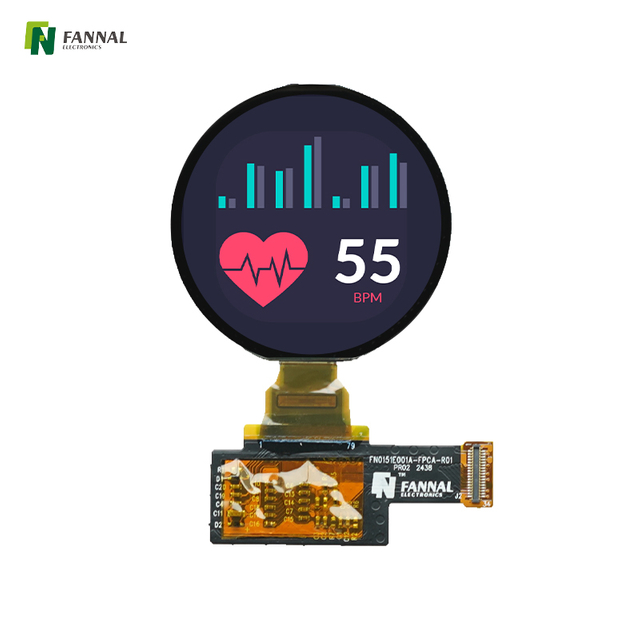
Chinese AMOLED production has expanded dramatically, with multiple manufacturers qualifying AMOLED supply for major smartphone brands including Apple and Samsung. The certification of Chinese AMOLED suppliers by premium brands validates the quality levels that leading Chinese manufacturers have achieved. Fannal Electronics AMOLED display products benefit from this ecosystem of AMOLED manufacturing excellence, providing customers with access to advanced AMOLED technology at competitive pricing.
The expansion of AMOLED capacity in China has created supply surplus in some product categories, intensifying competition and driving price declines that benefit buyers across application segments. The competitive dynamics of AMOLED production increasingly mirror those of LCD, with Chinese manufacturers competing aggressively for market share.
Integrated Supply Chain
China's display manufacturing ecosystem includes comprehensive supply chain integration that reduces lead times and improves supply reliability. Key materials including glass substrates, polarizers, optical films, and display driver semiconductors are produced domestically or available from nearby suppliers. The proximity of supply chain elements reduces logistics costs and improves responsiveness to demand fluctuations.
The integrated supply chain also enables rapid qualification of new products and process changes that would require longer lead times with internationally sourced components. This supply chain integration provides Chinese manufacturers with agility advantages that complement their scale advantages.
Customization and Engineering Support
Leading Chinese display manufacturers including Fannal Electronics offer extensive customization capabilities that enable product-specific display solutions rather than one-size-fits-all commodity panels. The customization capabilities of Chinese manufacturers have expanded significantly as engineering talent and process capabilities have matured. Fannal Electronics custom TFT display capabilities span from modified optical specifications and specialized interfaces to fully custom cover glass, touch sensor integration, and mechanical design adaptation for industrial, automotive, medical, and consumer applications.
The engineering capabilities supporting customization have reached levels that enable development of highly differentiated display solutions. Product development timelines that previously required engagement with international suppliers for specialized expertise can now be accomplished with Chinese manufacturers that possess equivalent or superior engineering capabilities.
China's Manufacturing Excellence: Technology and Process
Advanced Fabrication Technology
Chinese display fabs incorporate the most advanced equipment from global suppliers including Applied Materials, Tokyo Electron, Canon, and Nikon, deploying equivalent technology to the most advanced facilities operated by Samsung, LG, or Taiwan-based manufacturers. The equipment investment required for state-of-the-art display fabrication creates barriers to entry that favor large-scale manufacturers with access to capital and markets.
The combination of advanced equipment, experienced engineering teams, and massive production volumes creates a learning environment that drives continuous process improvement at a pace that competitors struggle to match. Chinese manufacturers have demonstrated capability to rapidly absorb and implement new process technologies, closing capability gaps with international leaders in shorter timeframes than historically observed in the industry.
Process development activities increasingly originate within China rather than being transferred from international partners, reflecting the maturation of Chinese display engineering capabilities. This indigenous process development capability provides competitive advantages in cost, schedule, and technology optimization that complement equipment-based advantages.
Quality Management Systems
Leading Chinese display manufacturers operate comprehensive quality management systems certified to ISO 9001, IATF 16949 (automotive), and ISO 13485 (medical) standards as applicable to their target markets. Statistical process control, automated optical inspection, and comprehensive module-level testing ensure that display products meet specifications consistently across millions of units of production. The quality management maturity of leading Chinese manufacturers matches or exceeds that of international competitors.
Fannal Electronics quality management system encompasses incoming material inspection, in-process quality controls, and final product testing, ensuring consistent quality across all production runs. Quality metrics including defect rates, first-pass yield, and customer returns demonstrate the quality levels that Chinese manufacturers achieve in high-volume production.
The extension of quality management systems to automotive and medical applications requires additional capabilities including production part approval processes (PPAP), advanced product quality planning (APQP), and failure mode and effects analysis (FMEA) that Chinese manufacturers have implemented to meet automotive qualification requirements.
Sustainable Manufacturing Practices
Chinese display manufacturers have invested substantially in environmental management systems and sustainable manufacturing practices. Water recycling systems reduce freshwater consumption, advanced exhaust treatment systems minimize air emissions, and hazardous waste management programs ensure regulatory compliance. These investments respond to both regulatory requirements and customer expectations for environmentally responsible manufacturing.
The environmental footprint of display manufacturing has become an increasing focus for customers evaluating supply chain sustainability. Chinese manufacturers that have invested in environmental management systems can demonstrate environmental performance that satisfies customer sustainability requirements.
Key Chinese Display Manufacturers
BOE Technology Group (Beijing Oriental Electronics)
BOE is China's largest and the world's largest display manufacturer by revenue, operating multiple Gen 8.5 and Gen 10.5 LCD fabs and multiple AMOLED production lines. BOE supplies displays to major brands including Apple, Samsung, Dell, and Lenovo, validating the company's quality credentials across demanding customers. BOE's scale provides advantages in purchasing power, process development, and market influence that reinforce its competitive position.
The company's AMOLED capabilities have advanced rapidly, with BOE now qualified as an AMOLED supplier for premium smartphone brands that previously relied exclusively on Samsung Display. This qualification demonstrates that Chinese AMOLED manufacturers have achieved quality levels that satisfy the most demanding customers.
CSOT (TCL China Star Optoelectronics Technology)
CSOT operates Gen 11 LCD fabs optimized for large-area TV panels and smaller fabs for IT and mobile applications. CSOT has developed proprietary HVA LCD technology that provides high contrast ratios through multi-domain vertical alignment, differentiating its LCD products from commodity alternatives. This technology development demonstrates indigenous innovation capability that Chinese manufacturers increasingly exhibit.
CSOT's integration with TCL's consumer electronics business provides a captive customer base that supports fab utilization during periods of weaker external demand. This vertical integration represents a business model advantage that pure-play panel manufacturers cannot match.
Tianma Microelectronics
Tianma specializes in small-to-medium display solutions for industrial, medical, automotive, and consumer applications. Tianma's strength lies in customized display solutions and its reputation for reliability in demanding applications. The company's focus on specialized applications rather than commodity television panels has created a differentiated competitive position.
Tianma's automotive display capabilities have achieved recognition through qualification with major automotive OEMs, validating the company's capabilities in this demanding application segment. The automotive qualification process requires rigorous testing and quality system compliance that demonstrates manufacturing maturity.
Visionox
Visionox is a specialized AMOLED manufacturer that has emerged as a significant global AMOLED supplier. The company operates AMOLED production lines and has been certified by major smartphone brands as a qualified AMOLED supplier, demonstrating capabilities that compete with more established AMOLED producers. Visionox's focused investment in AMOLED technology has created manufacturing expertise that serves demanding customers.
Fannal Electronics
Fannal Electronics operates within China's advanced display manufacturing ecosystem, providing specialized TFT display, capacitive touch panel, and AMOLED display solutions for industrial, automotive, medical, and consumer applications. Fannal Electronics combines the advantages of China's manufacturing scale with focused engineering support for specialized applications, offering both standard catalog products and fully customized display solutions. The company's differentiation lies in engineering-driven customization that addresses specific customer requirements rather than offering only commodity products.
Applications: Global Markets for Chinese Display Manufacturing
Consumer Electronics Supply Chain
Chinese display manufacturers are the primary supply source for virtually all consumer electronics brands globally. The concentration of smartphone manufacturing in China creates natural alignment between display supply and device assembly that favors Chinese display manufacturers. Fannal Electronics serves the consumer electronics market with cost-effective LCD module solutions that meet the demanding quality and supply requirements of this competitive industry.
The consumer electronics supply chain has adapted to Chinese display manufacturing dominance through procurement strategies that emphasize supplier diversification, safety stock inventory, and alternate source qualification. These supply chain strategies mitigate risks associated with concentration while capturing the cost and capability advantages of Chinese manufacturing.
Industrial and Medical Equipment
Industrial and medical equipment manufacturers increasingly source displays from Chinese manufacturers that meet the extended temperature range, long lifecycle, and reliability requirements of these demanding applications. The qualification of Chinese manufacturers for industrial and medical applications demonstrates that Chinese manufacturing has achieved quality levels suitable for demanding deployment scenarios. Fannal Electronics industrial display products serve these markets with displays qualified to extended temperature ranges and certified to ISO 13485 medical device quality standards.
Medical device manufacturers face regulatory requirements that mandate demonstrated quality system compliance and consistent product performance. Chinese manufacturers with appropriate certifications provide supply options that address these regulatory requirements while providing cost advantages compared to traditional medical display suppliers.
Automotive Display Supply
Chinese manufacturers including BOE, Tianma, and Visionox have qualified automotive display production lines that supply automotive OEMs and Tier 1 suppliers globally. The automotive qualification process includes IATF 16949 quality system certification, AEC-Q100/AEC-Q200 component qualification, and specific customer requirements that demonstrate manufacturing maturity. Fannal Electronics automotive display products are engineered to AEC-Q100 and AEC-Q200 automotive qualification standards, providing the durability and consistency that automotive manufacturers require.
The automotive industry's transition toward larger, higher-resolution displays creates growth opportunities for display manufacturers that can meet demanding automotive requirements. Chinese manufacturers are investing in automotive display capabilities that position them to capture increasing share of this growing market segment.
Comparison: China vs. Global Display Manufacturing
Capability
China Display Manufacturing
Taiwan/Korea/Japan
China Advantage
LCD Production Capacity
>60% global share
~25% global share
China dominant
AMOLED Production
Growing rapidly
Samsung/LG lead
Closing gap
Manufacturing Cost
Lowest cost
Moderate to high
China advantage
Customization Capability
High (select suppliers)
Moderate
Comparable
Technology Level
World-class (leading fabs)
World-class
Parity
Supply Chain Proximity
Domestic/regional
Mixed
China advantage
Engineering Support
Excellent (specialized)
Good
Comparable
Minimum Order Quantity
Flexible
Higher minimums
China advantage
Lead Time
Short to moderate
Moderate
Comparable
Quality Consistency
High (certified suppliers)
High
Parity
AMOLED Yield
Improving rapidly
Leading edge
Closing gap
Market Trends in China's Display Industry
Continued Capacity Expansion and Consolidation
Chinese display manufacturers continue expanding production capacity, with new fab construction focused on AMOLED and advanced LCD technologies. As capacity growth outpaces demand growth, competitive pressure is intensifying, favoring the lowest-cost producers and driving consolidation among manufacturers. The consolidation environment creates opportunities for well-positioned manufacturers while threatening marginal producers.
The competitive dynamics favor manufacturers with scale, technology, and cost advantages that enable profitability even in oversupply conditions. Manufacturers without these advantages face pressure to exit the market or accept unfavorable competitive positions that threaten long-term viability.
Moving Up the Technology Value Chain
Chinese manufacturers are shifting focus from capacity expansion to technology advancement, investing in next-generation display technologies including micro-LED, rollable OLED, and transparent OLED that offer higher margins and differentiate Chinese production from commodity LCD. These advanced technologies require manufacturing capabilities that Chinese manufacturers have developed through continuous investment and technology learning.
The technology advancement trajectory of Chinese manufacturers has accelerated as engineering capabilities and R&D investment have reached levels that enable rapid technology development. The gap between Chinese and international technology leaders has narrowed substantially, with Chinese manufacturers now leading in some technology categories.
Regional Supply Chain Development
As geopolitical considerations influence global supply chain strategy, Chinese manufacturers are investing in regional supply chain infrastructure to serve markets in Southeast Asia, Europe, and the Americas. This regionalization responds to customer requests for supply diversification and prepares for potential trade policy changes that could affect direct China exports. Fannal Electronics maintains inventory hubs and technical support teams across multiple regions to ensure responsive customer service.
The regional supply chain development represents adaptation to a more complex global trade environment where customers increasingly seek supply options that balance cost advantages with risk mitigation. Chinese manufacturers that offer regional supply options position themselves to retain customer relationships despite geopolitical pressures.
Sustainability and ESG Focus
Environmental, social, and governance (ESG) considerations are increasingly influencing supply chain decisions, with customers evaluating suppliers based on sustainability performance and social responsibility. Chinese display manufacturers have invested in sustainability programs that address these evaluation criteria, including environmental management systems, energy efficiency improvements, and labor practice compliance.
Buying Guide: Sourcing Displays from Chinese Manufacturers
Verify Quality Standards and Certifications
Confirm that the manufacturer holds relevant quality certifications including ISO 9001 for general quality management, IATF 16949 for automotive applications, and ISO 13485 for medical applications. Certification to these standards provides baseline assurance of quality management system capability, though actual quality performance requires verification through product qualification and supplier assessment.
Third-party quality audits provide additional verification of manufacturing capability and compliance with quality system requirements. Fannal Electronics participates in customer audits and third-party certification audits that validate quality system compliance.
Evaluate Technical Capability vs. Application Requirements
Not all Chinese display manufacturers serve all application segments equally. Fannal Electronics specializes in industrial, automotive, medical, and consumer applications with engineering-driven customization that addresses specific product requirements and tight production schedules. The specialization of different manufacturers creates opportunities for buyers to align supplier selection with application requirements.
Technical capability evaluation should include review of production equipment, process capabilities, testing and inspection equipment, and engineering qualifications of key personnel. Fannal Electronics engineering team provides technical capability presentations and facility tours that enable thorough capability evaluation.
Assess Communication and Engineering Support
Effective communication with Chinese suppliers requires attention to time zone differences, language considerations, and cultural communication styles. Fannal Electronics provides engineering support in multiple languages with responsive communication channels that enable effective collaboration during development and production. The quality of communication and support often differentiates successful supplier relationships from problematic ones.
Response time and issue resolution effectiveness are practical indicators of supplier support quality. Evaluation of historical supplier performance through reference checks and delivery experience provides practical insight into support quality.
Conduct Thorough Qualification and Testing
Comprehensive product qualification—testing display samples under actual application conditions including temperature, humidity, vibration, and EMC exposure—is essential regardless of the manufacturer's reputation or certifications. Qualification testing validates that specific products meet application requirements rather than assuming compliance based on general specifications.
Fannal Electronics provides qualification support including custom test plans, accelerated life testing, and failure analysis that enable thorough product qualification. The investment in qualification testing protects against field quality issues that are far more costly to address than qualification testing.
Operational Insights for Managing Chinese Display Suppliers
Relationship Building and Trust Development
Chinese business culture places significant value on relationship building and long-term partnership. Fannal Electronics prioritizes transparent communication, consistent quality, and collaborative problem-solving to build lasting relationships with global customers. The investment in relationship building yields returns through improved responsiveness, quality consistency, and cooperation during challenging situations.
Long-term contracts and forecast commitments strengthen supplier relationships by providing visibility into future demand that enables production planning and capacity allocation. Fannal Electronics offers forecast-based pricing programs that reward commitment with preferential pricing and supply allocation.
IP Protection and Confidentiality
Protecting intellectual property when working with Chinese manufacturers requires appropriate contractual protections including non-disclosure agreements and clear IP ownership provisions. Fannal Electronics maintains strict confidentiality policies and comprehensive IP protection agreements that protect customer proprietary information. The company's reputation and customer base depend on IP protection credibility that motivates rigorous compliance.
Practical IP protection measures include limiting disclosure of complete technical specifications to essential personnel, using component-level rather than complete assembly drawings, and maintaining proprietary processes within China-based operations rather than sharing process details.
Logistics and Supply Chain Management
Effective logistics management for Chinese display supply involves optimizing shipping modes, managing inventory at regional distribution points, and planning for supply disruptions through buffer inventory and alternative sourcing strategies. Sea freight dominates for standard supply due to cost advantages, while air freight serves urgent requirements despite higher cost. Fannal Electronics logistics team coordinates freight forwarding, customs clearance, and delivery scheduling to ensure reliable supply to global customers.
Lead time management requires attention to production lead times, shipping transit times, customs clearance duration, and buffer stock requirements. Comprehensive lead time visibility enables effective inventory management and production planning.
Quality Issue Resolution
Effective quality issue resolution requires clear communication of issue details, prompt root cause analysis, and decisive corrective action. Fannal Electronics quality organization provides dedicated support for issue resolution with escalation paths that enable rapid response to critical quality situations. The quality relationship between customer and supplier should enable open discussion of issues without blame that inhibits learning and improvement.
Frequently Asked Questions
Why has China become the dominant display manufacturer?
China's display manufacturing dominance results from a combination of factors: massive government policy support and investment funding, access to the world's largest electronics manufacturing market, early technology transfer agreements, continuous capital investment in state-of-the-art fabrication facilities, and the economies of scale created by serving the massive domestic market. The policy support included preferential treatment for display manufacturing investments, coordinated technology transfer from international partners, and demand-side policies that created market for Chinese production.
Are Chinese displays as reliable as displays from Japan or Korea?
Quality among Chinese display manufacturers varies widely. Leading Chinese manufacturers including those that supply Apple, Samsung, and major automotive OEMs produce displays that meet or exceed the quality of any global competitor. Fannal Electronics quality management system ensures consistent quality that meets the demanding requirements of industrial, automotive, and medical applications. Supplier selection within Chinese manufacturing requires evaluation of specific manufacturer capabilities rather than assumptions based on country of origin.
What is the typical lead time for Chinese display modules?
Lead times for standard display modules from Chinese manufacturers typically range from 4 to 8 weeks for sea freight shipment, with air freight reducing lead time to 1 to 2 weeks at higher cost. Customized products may require longer lead times for development and qualification. Fannal Electronics maintains buffer inventory of standard products to support urgent customer requirements.
Can I get customized display solutions from Chinese manufacturers?
Yes, many Chinese display manufacturers including Fannal Electronics offer extensive customization capabilities including modified optical specifications, custom cover glass design, touch sensor integration, specialized interfaces, and mechanical adaptations. Customization capabilities vary among manufacturers, with some focusing on standard products while others offer extensive customization. Fannal Electronics engineering team works with customers to develop customized solutions that meet specific application requirements.
How do I protect my IP when working with Chinese suppliers?
Protect intellectual property through comprehensive legal agreements including NDAs, IP ownership clauses, and audit rights. Limit disclosure of complete technical specifications to essential personnel. Fannal Electronics implements strict IP protection protocols and complies with all applicable intellectual property laws. The practical effectiveness of IP protection depends on supplier culture and commercial incentives as much as legal agreements.
What payment terms are typical for Chinese display procurement?
Typical payment terms for Chinese display suppliers include 30% deposit with order placement and 70% balance payable against shipping documents or upon receipt. Letter of credit arrangements provide additional security for larger orders. Fannal Electronics offers flexible payment terms including letter of credit arrangements and open accoun
Technical requirements rarely stop at the LCD panel itself. Depending on the application, the display may also require customized brightness, interface, touch performance, cover glass, optical bonding, FPC, operating temperature, or mechanical integration.
FANNAL provides customized TFT LCD and AMOLED display solutions for industrial, medical, automotive, outdoor, and embedded applications, with display, touch, and optical integration support.