FN0240E014A
FANNAL
2.4
36.72*48.96
-20~80
-40~80
Small Size Display
450×600
ALL
MIPI&MCU&SPI
800
Can be chosen
| Availability: | |
|---|---|
| Quantity: | |
2.4-inch AMOLED display, 450×600, 800cd/m², Small Size Display
This AMOLED display offers a larger 2.4-inch canvas, bringing your visuals to life with enhanced clarity and immersive colors. With a rich 450x600 pixel resolution, it ensures every detail is sharp and defined, making it perfect for applications that require both precision and style. The MIPI and SPI and MCU interfaces provide seamless integration, supporting versatile device development. The self-emissive AMOLED technology delivers deep blacks, high contrast, and energy efficiency, making it ideal for wearables, portable displays, and smart devices that demand long battery life.
Ultra-High 800 Nits Brightness: One of the brightest small AMOLEDs available, providing sunlight-readable performance for outdoor handhelds and wearables.
Versatile Triple Interface: Supports MIPI, MCU, and SPI, offering maximum flexibility for both high-speed video data and low-power control systems.
True Blacks & Infinite Contrast: Self-emissive AMOLED technology ensures perfect blacks and vibrant colors that standard LCDs cannot match.
Ultra-Slim Form Factor: At just 0.78mm thick, this Rigid AMOLED panel enables extremely thin industrial designs and lightweight portable products.
Full Viewing Angles (ALL): IPS-like performance with zero color shifting, ensuring critical data is legible from any angle.
Low Power Consumption: Efficient power management by only illuminating active pixels, significantly extending the battery life of portable devices.

General Specifications:
LCD size(inch): | 2.4 (Diagonal) |
Resolution: | 450(H)×600(V) |
Pixel Pitch: | 81.99(H)x81.99(V) |
Active Area(mm): | 36.72(H)×48.96(V) |
Module Size(mm): | 51.56×38.72×0.78 |
Display type: | Rigid AMOLED |
Interface: | MIPI&MCU&SPI |
View Direction: | ALL |
| Power Supply: | 3.3 |
| Luminance(cd/m2): | 800(Typ.) |
Interface:
Pin No. | Symbol | I/O | Description |
| 1 | GND | P | Ground. |
| 2 | GND | P | Ground. |
| 3 | ELVSS | P | Negative power supply for panel. |
| 4 | ELVSS | P | Negative power supply for panel. |
5 | GND | P | Ground. |
| 6 | ELVDD | P | Positive power supply for panel. |
| 7 | ELVDD | P | Positive power supply for panel. |
| 8 | GND | P | Ground. |
| 9 | VCI | P | Power supply for display driver IC interface analogic system. |
| 10 | GND | P | Ground. |
| 11 | VDDIO | P | Power supply for display driver IC interface and logic system. |
| 12 | GND | P | Ground. |
| 13 | TE1 | O | IC Status active reporting pin. |
| 14 | SWIRE | O | Swire protocol setting pin of Power IC. |
| 15 | TE | O | Tearing effect output pin to synchronize MCU to frame writing, activated by S/W command. When this pin is not activated, this pin is output low. |
| 16 | RESX | I | Display driver reset, must be applied to properly initialize the chip. Signal is active low. |
| 17 | GND | P | Ground. |
| 18 | SDI_RDX | I/O | SDl: Serial input signal in SPl l/F. The data is input on the rising edge of the SCL signal. RDX:Reads strobe signal to write data when RDX is “Low" in 80-series MPU interface. |
| 19 | DCX | I | Display data/command selection in 80-series MPUl/F and 4-wire SPl l/F. |
| 20 | SCL | I | WRX :Writes strobe signal to write data when WRX is “Low" in 80-series MPU I/F. SCL: A synchronous clock signal in SPl l/F. |
| 21 | CSX | I | Chip select input pin( "Low" enable)in 80-series. |
| 22-29 | D0-D7 | I/O | 8-bit bi-directional data bus for 80-series MPU l/Fand 8-bit input data bus for RGB l/F. |
| 30 | GND | P | Ground. |
| 31 | IM1 | I/O | Interface type selection. |
| 32 | IM0 | I/0 | Interface type selection. |
| 33 | GND | P | Ground. |
| 34 | GND | P | Ground. |
| 35 | D0P | I/O | Differential data signals if MIPI interface. |
| 36 | D0N | I/O | Differential data signals if MIPI interface. |
| 37 | GND | P | Ground. |
| 38 | GND | P | Ground. |
| 39 | CLKP | I | Differential data signals if MIPI interface. |
| 40 | CLKN | I | Differential data signals if MIPI interface. |
| 41 | GND | P | Ground. |
| 42 | GND | P | Ground. |
| 43 | MTP | P | MTP programming power supply. Must be left open or connected to GND in normal condition. |
| 44 | GND | P | Ground. |
| 45 | GND | P | Ground. |
Electrical Characteristics:
Parameter | Symbol: | Min. | Typ. | Max. | Unit |
OLED input Voltage | ELVDD | 2.0 | 3.6 | 6 | V |
| OLED output voltage | VDDIO | -4.7 | -3.6 | -0.4 | V |
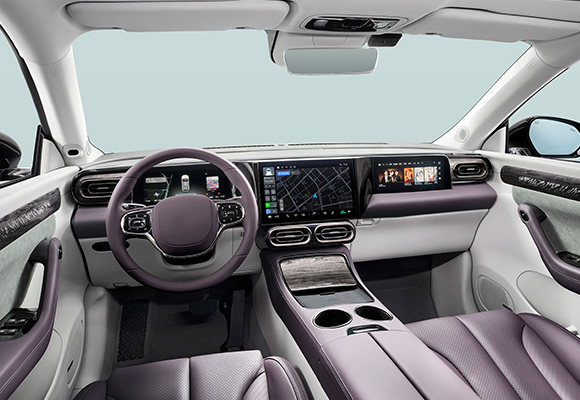
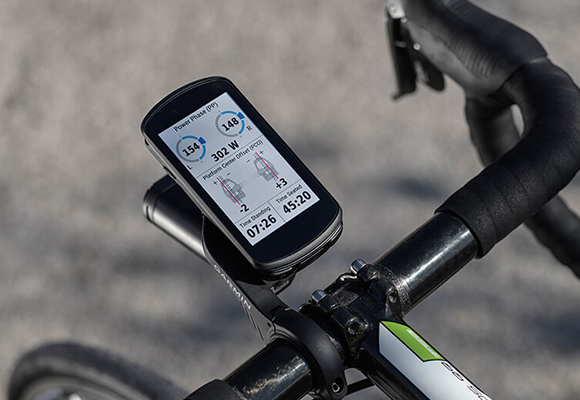
High-End Wearables: Smartwatches, fitness trackers, and luxury wearable tech that require sunlight legibility.
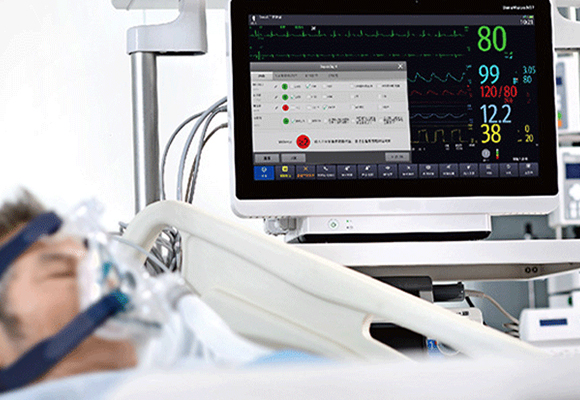
Portable Medical Devices: Handheld diagnostic tools, blood glucose monitors, and compact medical sensors requiring high-contrast visuals.
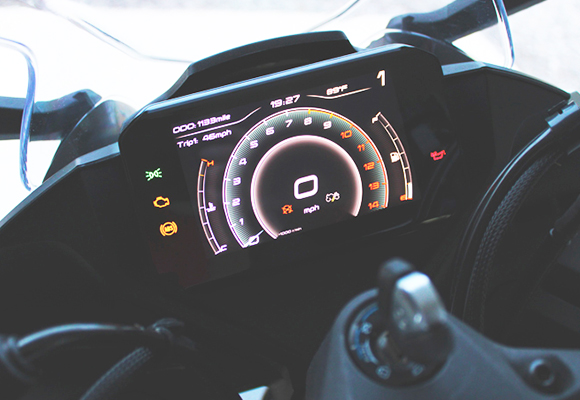
Industrial Handhelds: Rugged outdoor testing equipment and compact data loggers.
Smart Home & IoT: Premium smart thermostat controllers, smart locks, and compact voice-assistant displays.
![]() | ![]() | ![]() | ![]() |
![]() | ![]() | ![]() | ![]() |
![]() | ![]() | ![]() | ![]() |
Q1: Why is 800 nits brightness important for a 2.4-inch AMOLED?
Answer: Most small AMOLEDs hover around 300-400 nits. At 800 nits, this display remains clearly readable in outdoor environments and direct sunlight, making it ideal for outdoor sports wearables or field equipment.
Q2: How does the triple interface (MIPI/MCU/SPI) benefit engineers?
Answer: It allows for "one-size-fits-all" integration. Engineers can use SPI/MCU for low-power static interfaces to save battery, or MIPI for high-frame-rate animations and complex GUIs, all on the same hardware platform.
Q3: What is the difference between Rigid AMOLED and Flexible AMOLED?
Answer: Rigid AMOLED uses a solid glass substrate, which provides excellent mechanical stability and cost-effectiveness for flat-screen applications, while maintaining the superior contrast and thinness of OLED technology.
Q4: Can this 2.4" display support an "Always-On Display" (AOD) feature?
Answer: Yes. Because AMOLED pixels emit their own light, AOD mode can be used to display time or icons using very few pixels, consuming minimal power compared to an LCD that requires a full backlight.