FN0143E001A
FANNAL
1.43
36.35*36.35
-20~70
-30~80
466×466
QSPI
750
| Quantity: | |
|---|---|
Drawing
Specifications
Item |
Specification |
Unit |
|---|---|---|
Diagonal size |
1.43 |
inch |
Resolution |
466×466 |
|
Display color |
16.7M (RGB × 24bits) |
- |
Pixel arrangement |
Real RGB arrangement |
- |
Interface |
QSPI |
- |
Driver IC |
ChipOne |
- |
Dimension outline |
40.30(V) × 40.60(W) × 2.325(T) |
mm |
LTPS Glass outline |
39.23(V) × 39.15(W) |
mm |
Encapsulation Glass outline |
39.15(V) × 39.15(W) |
mm |
Active area |
Φ36.35 |
mm |
Pixel pitch |
78 × 78 |
μm |
Glass thickness |
0.5 |
mm |
Operation Temp |
-20~70 |
℃ |
Storage Temp |
-30~80 |
℃ |
Luminance |
750 cd/m² (TYP), 700 cd/m² (MIN) |
cd/m² |
Environmental Compliance |
ROHS & HALOGEN FREE |
- |
Item |
Symbol |
Min. |
Typ. |
Max. |
Unit |
Remark |
|---|---|---|---|---|---|---|
AMOLED Power |
ELVDD |
3.25 |
3.3 |
3.35 |
V |
Positive |
AMOLED Power |
ELVSS |
-3.3 |
-3.3 |
-3.35 |
V |
Ref Negative |
Digital Power Supply |
VDDIO |
1.7 |
1.8 |
1.95 |
V |
Ref |
Analog Power Supply |
VCI |
3.25 |
3.3 |
3.35 |
V |
Ref |
Pin No. |
Symbol |
I/O |
Function Description |
|---|---|---|---|
1 |
ELVSS1 |
Power |
AMOLED power Negative |
2 |
ELVSS2 |
Power |
AMOLED power Negative |
3 |
ELVDD1 |
Power |
AMOLED power Positive |
4 |
ELVDD2 |
Power |
AMOLED power Positive |
5 |
FOG |
- |
Test pin |
6 |
FOG/FOF |
- |
Test pin |
7 |
FOF |
- |
Test pin |
8 |
VREFP5 |
Power |
No connection |
9 |
VREFN5 |
Power |
OLED drive voltages |
10 |
BVP3D |
Power |
AMOLED power Positive in idle mode |
11 |
BVN3D |
Power |
AMOLED power Negative in idle mode |
12 |
VCL |
Power |
Driver IC internal power |
13 |
VREF |
Power |
Driver IC internal power |
14 |
VCI |
Power |
Driver IC analog supply |
15 |
VCI |
Power |
Driver IC analog supply |
16 |
TE1 |
O |
Tearing effect output pin |
17 |
SWIRE |
O |
Swire protocol setting pin of Power IC |
18 |
TE |
O |
Tearing effect output pin |
19 |
RESX |
- |
This signal will reset the device and must be applied to properly initialize the chip. Signal is active low. |
20 |
SDO |
O |
Serial output signal in SPI I/F. The data is output on the rising/falling edge of the SCL signal. |
21 |
SDI_RDX |
I |
Serial input signal in SPI I/F. The data is input on the rising edge of the SCL signal. |
22 |
DCX |
I |
Display data / command selection in 80-series MPU I/F and 4-wire SPI I/F. D/CX = "0": Command; D/CX = "1": Display data or Parameter |
23 |
WRX_SCL |
I |
A synchronous clock signal in SPI I/F. |
24 |
CSX |
I |
Chip select input pin ("Low" enable) |
25 |
D0 |
I/O |
8-bit-directional data bus for 80-series MPU I/F and 8-bit input data bus for RGB I/F |
26 |
D1 |
I/O |
8-bit-directional data bus for 80-series MPU I/F and 8-bit input data bus for RGB I/F |
27 |
IM1 |
I |
Interface type selection. |
28 |
IM0 |
I |
Interface type selection. |
29 |
DSWAP |
I |
Input pin to select HSSI_D0/D1 data lane sequence in high speed interface only |
30 |
PSWAP |
I |
Input pin to select HSSI_D0/D1 data lane polarity in high speed interface only |
31 |
VDDIO |
Power |
Driver IC digital I/O supply |
32 |
VDDIO |
Power |
Driver IC digital I/O supply |
33 |
DVDD |
Power |
Driver IC analog supply |
34 |
DGND |
Power |
The power ground |
35 |
HSSI_D1_P |
I/O |
These pins are DSI-D1+/- differential data signals |
36 |
HSSI_D1_N |
I/O |
These pins are DSI-D1+/- differential data signals |
37 |
AGND1 |
Power |
The power ground |
38 |
HSSI_CLK_P |
I |
These pins are DSI-CLK+/- differential clock signals |
39 |
HSSI_CLK_N |
I |
These pins are DSI-CLK+/- differential clock signals |
40 |
AGND2 |
Power |
The power ground |
41 |
HSSI_D0_P |
I/O |
These pins are DSI-D0+/- differential data signals |
42 |
HSSI_D0_N |
I/O |
These pins are DSI-D0+/- differential data signals |
43 |
AGND3 |
Power |
The power ground |
44 |
C11P |
- |
Capacitor connection pins for the step-up circuit which generate AVDD |
45 |
C11N |
- |
Capacitor connection pins for the step-up circuit which generate AVDD |
46 |
C12P |
- |
Capacitor connection pins for the step-up circuit which generate AVDD |
47 |
C12N |
- |
Capacitor connection pins for the step-up circuit which generate AVDD |
48 |
AVDD |
Power |
Driver IC internal power |
49 |
C31P |
- |
Capacitor connection pins for the step-up circuit which generate VCL |
50 |
C31N |
- |
Capacitor connection pins for the step-up circuit which generate VCL |
51 |
C32P |
- |
Capacitor connection pins for the step-up circuit which generate VCL |
52 |
C32N |
- |
Capacitor connection pins for the step-up circuit which generate VCL |
53 |
C41P |
- |
Capacitor connection pins for the step-up circuit which generate VGH |
54 |
C41N |
- |
Capacitor connection pins for the step-up circuit which generate VGH |
55 |
C51N |
- |
Capacitor connection pins for the step-up circuit which generate VGL |
56 |
C51P |
- |
Capacitor connection pins for the step-up circuit which generate VGL |
57 |
VGH |
Power |
Driver IC internal power |
58 |
VGHR |
Power |
Driver IC internal power |
59 |
Dummy |
- |
NC |
60 |
VGLR |
Power |
Driver IC internal power |
61 |
VGL |
Power |
Driver IC internal power |
62 |
AGND4 |
Power |
The power ground |
63 |
MTP_PWR |
Power |
Power supply for OTP. Leave the pin to open when not in use. |
64 |
FOG |
- |
Test pin |
65 |
FOG/FOF |
- |
Test pin |
66 |
FOF |
- |
Test pin |
67 |
ELVDD3 |
Power |
AMOLED power Positive |
68 |
ELVDD4 |
Power |
AMOLED power Positive |
69 |
ELVSS3 |
Power |
AMOLED power Negative |
70 |
ELVSS4 |
Power |
AMOLED power Negative |
Pin No. |
Symbol |
I/O |
Function Description |
|---|---|---|---|
1 |
FOG1 |
- |
FOG test pin |
2 |
FOG2 |
- |
FOG test pin |
3 |
GND1 |
P |
The power ground |
4 |
GND2 |
P |
The power ground |
5 |
Y07 |
- |
TP signal |
6 |
Y06 |
- |
TP signal |
7 |
GND3 |
P |
The power ground |
8 |
X00 |
- |
TP signal |
9 |
X01 |
- |
TP signal |
10 |
X02 |
- |
TP signal |
11 |
X03 |
- |
TP signal |
12 |
X04 |
- |
TP signal |
13 |
X05 |
- |
TP signal |
14 |
GND4 |
P |
The power ground |
15 |
Y00 |
- |
TP signal |
16 |
Y01 |
- |
TP signal |
17 |
Y02 |
- |
TP signal |
18 |
Y03 |
- |
TP signal |
19 |
Y04 |
- |
TP signal |
20 |
Y05 |
- |
TP signal |
21 |
GND5 |
P |
The power ground |
22 |
X07 |
- |
TP signal |
23 |
X06 |
- |
TP signal |
24 |
GND6 |
P |
The power ground |
25 |
GND7 |
P |
The power ground |
26 |
FOG3 |
- |
FOG test pin |
27 |
FOG4 |
- |
FOG test pin |
Applications
Designed for compact, high-end wearable devices requiring high resolution, low power consumption and premium visual performance.
Smartwatches
Fitness trackers
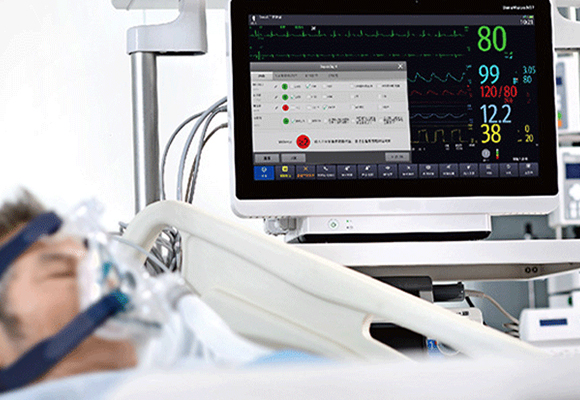
Health monitoring devices
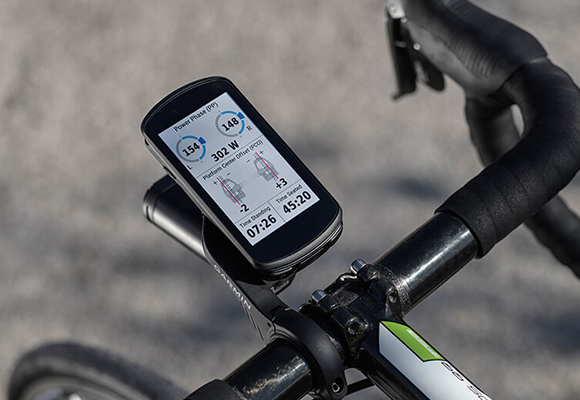
With 466×466 resolution and real RGB arrangement, the display delivers sharp UI rendering and smooth graphical performance, suitable for advanced smartwatch interfaces and always-on display modes.
Optimized for wearable devices used in outdoor or high ambient light environments.
Outdoor smartwatches
Sports wearables
Field-use monitoring devices
The 750 nits brightness (typ.) ensures clear visibility even under direct sunlight, addressing a common limitation of standard AMOLED displays in outdoor scenarios.
A suitable solution for space-constrained embedded systems requiring circular UI design.
Handheld instruments
Portable testing devices
Mini control terminals
The QSPI interface enables faster data transmission with reduced pin count, simplifying system integration for embedded platforms.
Supports product designs where circular displays enhance usability or aesthetics.
Smart home controllers
IoT control panels
Industrial wearable terminals
The on-cell touch integration reduces module thickness and improves optical performance, enabling more compact and reliable product design.
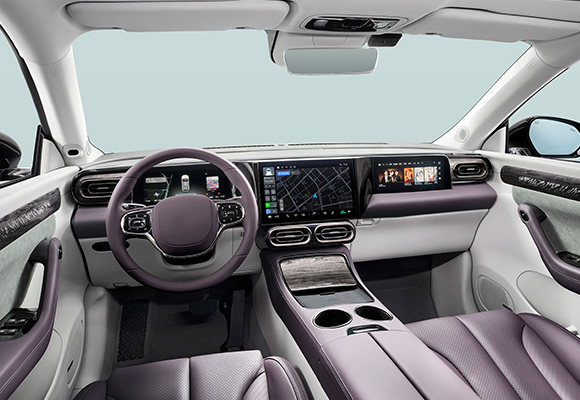
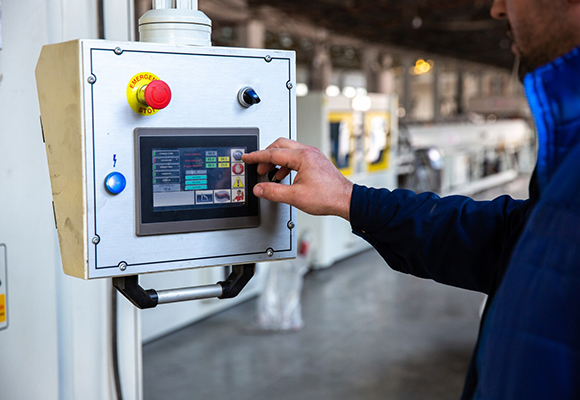
Building control panels, elevator displays, security monitoring stations, access control interfaces, energy management terminals
Case Study
A wearable device manufacturer required a compact, high-resolution round display for a next-generation smartwatch focused on outdoor usability and premium UI experience.
Key requirements included:
High pixel density for detailed UI rendering
Sufficient brightness for outdoor visibility
Thin module structure for lightweight design
Simplified integration with embedded mainboard
1. Outdoor Visibility Limitation of AMOLED
Standard AMOLED displays often struggle under strong ambient light.
2. Space Constraints in Compact Wearable Design
Limited internal space required a thinner and highly integrated display solution.
3. Interface Complexity
Traditional interfaces increase pin count and complicate PCB design in small devices.
High-Brightness AMOLED Panel (750 nits)
Improved outdoor readability compared to conventional AMOLED solutions
On-cell Touch Integration
Reduced overall module thickness and simplified assembly
QSPI Interface Implementation
Lower pin count and faster communication for compact embedded systems
466×466 High Resolution with Real RGB
Enhanced UI clarity and visual performance
Improved display visibility in outdoor environments
Reduced module thickness and overall device weight
Simplified system integration and PCB layout
Enhanced user experience with sharper UI rendering