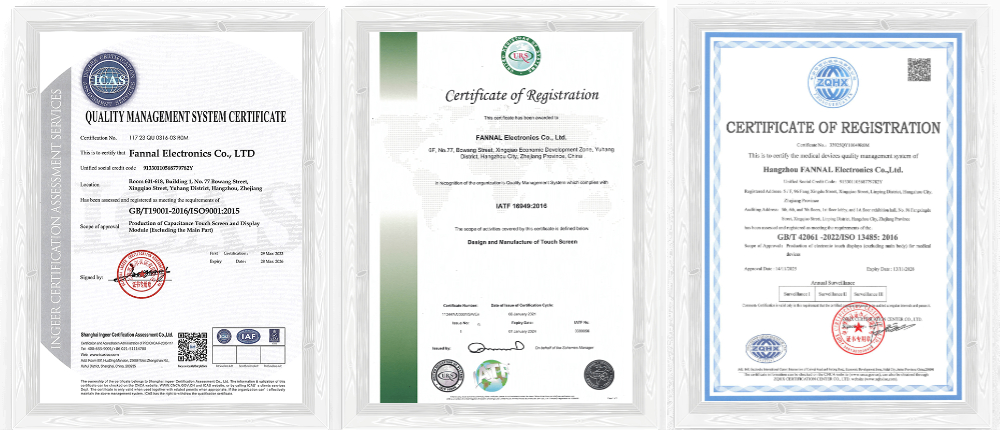
ISO 9001: This is the baseline quality standard applicable to any organisation aiming to consistently meet customer and regulatory requirements.
ISO 13485: This is a sector-specific standard for the medical device industry, focusing heavily on safety and regulatory compliance.
IATF 16949: This is a sector-specific standard for the automotive industry, designed to improve quality within the automotive supply chain.
RoHS: It is a product-specific directive that restricts the use of 10 hazardous substances primarily in the manufacturing of electronic and electrical equipment (EEE). Compliance is often marked with the CE logo.
REACH: This is a comprehensive chemical regulation that applies to almost all industries. It requires companies to register chemical substances with the European Chemicals Agency (ECHA) and manage risks associated with their use, focusing especially on Substances of Very High Concern (SVHC).
(3) Customisation (OEM/ODM) Capabilities
The most important point of B2B procurement:
Custom size/resolution/brightness
Custom cover glass shape
Anti-glare (AG), anti-UV, anti-fingerprint
Touch sensitivity tuning (glove/water)
Interface customisation (LVDS, RGB, MIPI, HDMI)
Logo / private label services
(4) Engineering Support
A reliable supplier must be able to solve:
Touch tuning
EMI noise issues
Display colour calibration
Wide-temperature stability
Firmware updates
B2B projects require long-term maintenance, not a one-time deal.
(5) Supply Stability & Lead Time
It's crucial:
Long-term supply plan(3–5 years)
Stable panel source
Reasonable MOQ(Reasonable B2B MOQ:500–1000)
Short sample lead time(6–8 weeks)
Mass production lead time(5–6 weeks)
(6) Export Capability
A factory that can export must provide:
Packing & pallet standards
Drop test/vibration test
CO / Form A / Form E
Global shipping support
After-sales support
✅Summary Checklist:10 Criteria for Selecting a Reliable B2B Touch Display Supplier
✓ Does the factory have established OEM/ODM production lines? ✓ Can they provide custom display & touchscreen solutions? ✓ Do they offer in-house optical bonding capability? ✓ Can they ensure a long-term and stable supply? ✓ Are they qualified for export to EU/US markets? ✓ Do they have experienced engineering support? ✓ Can they deliver rapid prototyping or fast sampling? ✓ Do they maintain strict quality control processes? ✓ Do they have cross-industry experience (industrial, medical, outdoor)? ✓ Can they provide private-label or white-label services?
If a supplier meets at least 7 out of these 10 criteria, they are generally a trustworthy partner for B2B projects.
For example, suppliers like Fannal that maintain in-house optical bonding, custom touch display development, and long-term OEM/ODM production lines are generally more reliable for industrial B2B projects.
FAQ
Q1. What makes a touch display supplier reliable for B2B projects?
A reliable B2B supplier must offer stable quality, OEM/ODM capabilities, strong engineering support, export experience, and long-term supply plans.
Q2. How to evaluate a touch display manufacturer's OEM/ODM capability?
Check whether they provide custom size, custom cover glass, bonding options, firmware tuning, logo printing, and full engineering support.
Q3. What certifications should a touch display factory have for export?
ISO 9001, IATF 16949, ISO 13485, REACH, and RoHS are essential for exporting to the US and EU.
Q4. What MOQ is normal for OEM/ODM touchscreen orders?
Typical B2B MOQ is 500–1000 pieces, depending on size and customisation level.
Q5. Can a supplier offer private label or custom branding?
Yes. Most manufacturers provide private label service, custom glass printing, and packaging customisation.
Q6. Should I choose a supplier or a trading company?
Factories are better for OEM/ODM projects because they offer engineering support and a stable supply. Traders suit small test orders.
Q7. What is the typical lead time for custom touch displays?
Sample: 6–8 weeks Mass production: 5–6 weeks Complex customisation may take longer.
Q8. What technologies should a reliable factory have?